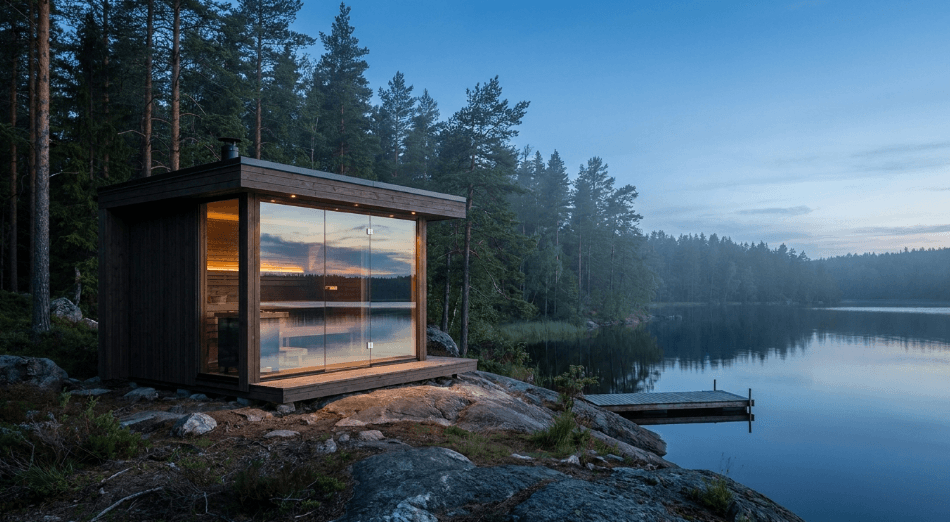
Owning an outdoor sauna for the first time mostly comes down to three things: building a consistent-use habit, doing a few minutes of maintenance monthly, and understanding that a well-built unit lasts 15 to 25 years while the heater element typically needs replacing sooner, around 7 to 12 years. New owners who treat the first few weeks as a habit-building period, rather than expecting the routine to feel natural immediately, tend to stick with it far longer than those who wait for motivation to show up on its own.
What Should the First Few Weeks of Ownership Look Like?
The first two or three weeks after installation are mostly about learning the specific unit’s quirks: how long it actually takes to preheat in different outdoor temperatures, how the door seal feels when it is closing properly, and which settings produce the heat level that feels right. Many new owners start with sessions that are too long or too hot in an effort to get their money’s worth immediately, which sometimes backfires into a session that feels unpleasant rather than relaxing. Starting at a lower temperature and shorter duration, then adjusting upward over several sessions, builds tolerance in a way that a single long, hot first session does not. Treating the first month as a calibration period rather than a performance benchmark leads to a much better long-term relationship with the sauna.
What Maintenance Actually Needs to Happen Regularly?
Routine maintenance for an outdoor sauna is closer to caring for a wooden deck than to anything mechanically complex. Wiping down benches after each session and leaving the door propped open briefly to let moisture evaporate prevents the wood from staying damp, which is the single biggest cause of premature warping. Every few months, checking the door seal for gaps and the exterior finish for weather damage catches small problems before they become expensive ones. Heater rocks accumulate mineral deposits over time, especially with hard water, and should be inspected and occasionally replaced, since heavily scaled rocks hold less heat and can crack under thermal stress. None of this requires special tools or skills beyond what a typical homeowner already uses for basic outdoor upkeep.
How Long Should a New Owner Expect the Sauna to Last?
A properly built cedar or thermally modified spruce sauna, sited on a good base and maintained with basic care, commonly lasts 15 to 25 years before major structural issues appear. The heater is usually the first major component to need attention, with elements typically lasting 7 to 12 years depending on frequency of use and water hardness, since mineral buildup accelerates wear on heating elements. Budgeting for an eventual heater replacement, rather than being surprised by it, keeps ownership costs predictable over the long run. A unit that is well-vented, properly based, and not left closed up while damp will consistently outlast one that skips these basics, even if both started with identical materials.
What Is the Biggest Adjustment for a First-Time Owner?
The most common surprise for new owners is realizing that consistency matters more than the specific model purchased. A modest two-person cabin used three or four times a week delivers more actual value, both in enjoyment and in whatever wellness benefit regular use provides, than a larger, more expensive unit that gets used once a month because it feels like a production to fire up. New owners who place the sauna somewhere genuinely convenient, close to the house with a clear, dry path, report sticking with the habit far more reliably than those who prioritized a scenic corner of the yard that requires a longer walk in bad weather. The unit itself matters less than most buyers initially assume; the routine built around it matters more.
What Should a New Owner Budget for Beyond the Purchase?
Beyond the upfront cost, new owners should plan for modest ongoing expenses: electricity or firewood depending on heater type, occasional wood conditioner or exterior sealant, and eventually a replacement heater element a decade or so into ownership. None of these costs are large individually, but adding them up over several years gives a more realistic total cost of ownership than the sticker price alone suggests. For anyone comparing models before buying, or looking to add accessories like extra benches or a thermometer later, taking time to browse the collection at a specialty retailer is a useful way to see current pricing and specifications side by side before deciding what fits the household’s budget and routine.
What Does the Research Say About Long-Term, Regular Use?
The research on sauna use is built almost entirely around people who use one consistently over years, which lines up with the ownership advice above. A large Finnish cohort study found that men who used a sauna four to seven times a week had lower rates of cardiovascular events and all-cause mortality than men who used one once a week, an association rather than a guaranteed outcome for any individual. A 2018 review in Mayo Clinic Proceedings summarized comparable cardiovascular associations across the broader literature, and a 2023 follow-up review examined whether combining sauna use with other healthy habits added further benefit. These findings depend on the kind of steady, years-long habit that only happens when a sauna is easy to maintain and convenient enough to actually use, which is the real argument for getting the basics of ownership right from the start.
Frequently Asked Questions
What does it actually take to own an outdoor sauna day to day? Periodic wood conditioning, checking the door seal, sweeping out debris, and keeping the heater rocks free of mineral buildup, most of it taking a few minutes a month.
How long does a well-maintained outdoor sauna typically last? A quality cedar or thermally modified spruce sauna commonly lasts 15 to 25 years, though the heater elements typically need replacement sooner, often in 7 to 12 years.
What is the biggest adjustment for a first-time owner? Realizing that consistent use matters more than the specific model bought. A smaller unit used three times a week beats a larger one used once a month.
Does a new owner need special skills to maintain a sauna? No. Basic maintenance is comparable to caring for an outdoor deck, with an electrician needed only for anything involving the heater’s wiring.
References
- Association between sauna bathing and fatal cardiovascular and all-cause mortality events, JAMA Internal Medicine, 2015
- Cardiovascular and Other Health Benefits of Sauna Bathing: A Review of the Evidence, Mayo Clinic Proceedings, 2018
- Does the Combination of Finnish Sauna Bathing and Other Lifestyle Factors Confer Additional Health Benefits? A Review of the Evidence, Mayo Clinic Proceedings, 2023